
Talking to Children and Grandchildren About Prostate Cancer: A Psychologist’s Guide for Families
Children do not need every medical detail. They need an honest explanation they can understand, reassurance about what will happen to them, and adults who are willing to keep talking.

The aim is not to remove every fear or sad feeling. It is to make sure that children do not face those feelings alone or fill the silence with something more frightening than the truth.
Many parents and grandparents delay this conversation because they want to protect the children they love. They wait for the right moment, the perfect words or more reassuring news. Meanwhile, children may notice whispered conversations, cancelled plans, hospital appointments and changes in the adults around them.
As a psychologist, I would like to begin with something that often brings relief: you do not need to explain everything, and you do not need to do it perfectly. The first conversation is only a beginning. What matters most is that the child learns, “The adults I trust will tell me important things, I can ask questions, and somebody will look after me.”
Why silence does not always protect children
Silence usually comes from love. However, children are very good at noticing that something has changed and not always able to explain it accurately. If nobody gives them a clear explanation, they may create one themselves.
A younger child may wonder whether an argument or a naughty thought caused Grandad to become ill. An older child may hear the word “cancer” through a door, search online and assume the worst information applies to their family. A teenager may stay quiet because everyone else already seems overwhelmed.
- They may feel frightened because they know something is wrong but do not know what.
- They may think the illness is their fault or that they can catch it.
- They may feel excluded from something that is changing family life.
- They may rely on overheard fragments, friends or unsuitable internet results.
Protection does not mean hiding every difficult fact. It means giving a child the truth in a form they can carry.

Honesty is not the same as saying everything. A child needs information that is true, relevant now and suitable for their age. They do not need test reports, statistics or every possible future outcome.
Before you speak: a five-minute family plan
You may feel you must find a completely calm moment. You do not. You can feel worried and still speak safely. A little preparation simply helps you avoid giving too much information because of nerves or making promises that nobody can guarantee.
Exercise: write one sentence for each question
- What do we know?
For example: “It is prostate cancer, and the doctors have recommended treatment.” - What do we not know yet?
For example: “We are waiting for a scan result and will know more next week.” - What will the child notice?
Hospital visits, tiredness, a change in routine or an adult who is upset. - What does the child need today?
Usually: a simple explanation, reassurance that they did not cause it, and a clear account of who will care for them. - Who will remain available afterwards?
Name an adult the child can approach later, when the first questions have had time to appear.
If you have only just received the diagnosis and are trying to steady your own thoughts, Coping With a Prostate Cancer Diagnosis: A Psychologist’s Guide may help you prepare emotionally before talking to the family.
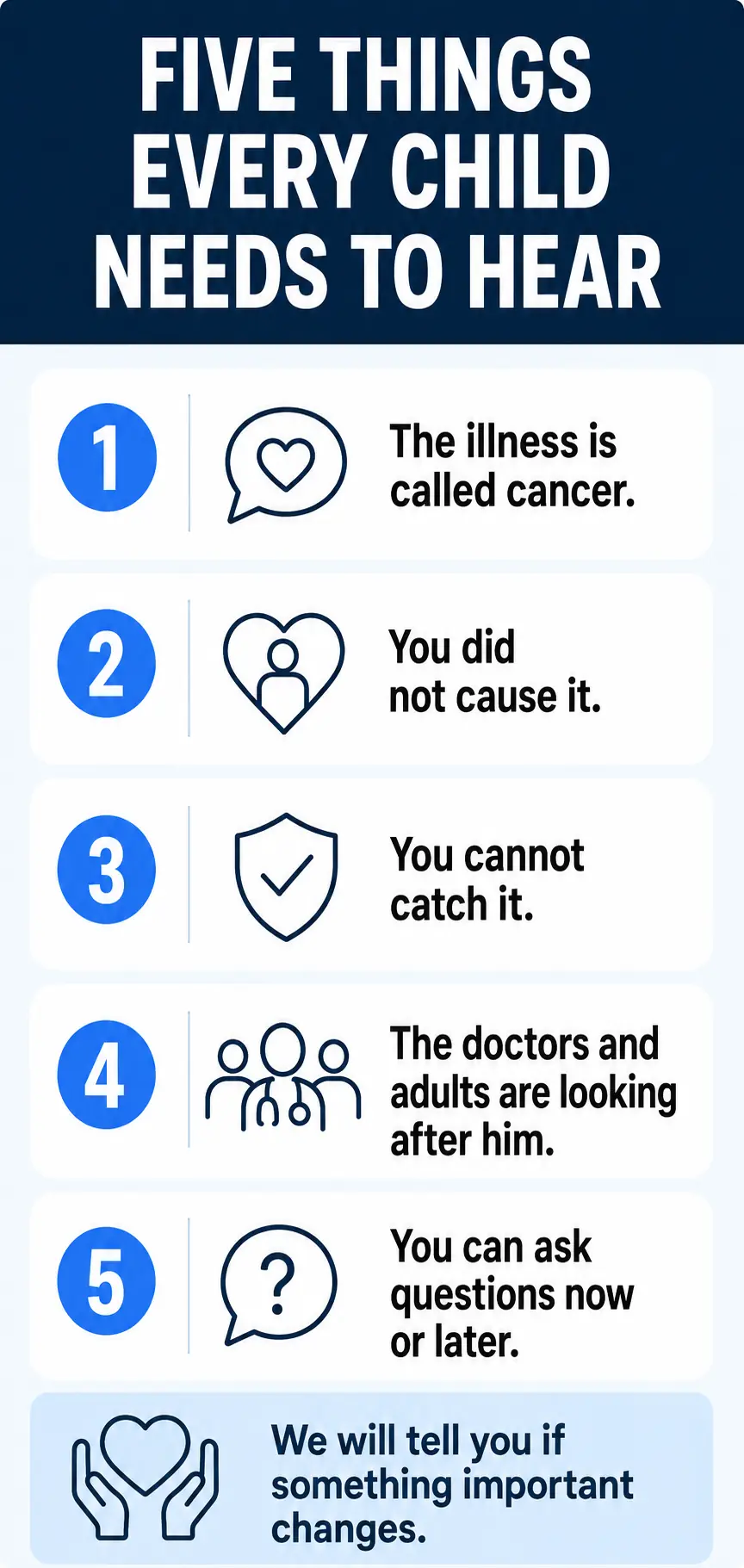
Five things every child needs to hear
Whatever their age, try to include these messages. You may not say them all in one breath, but do return to them.
- Name the illness. “The illness is called prostate cancer.” Clear language reduces the space for frightening guesses.
- Remove blame. “Nothing you said, thought or did caused this.” This is especially important for younger children.
- Explain that it is not contagious. “You cannot catch cancer. It is safe to sit close, hug and spend time together.”
- Name the caring adults. “The doctors are looking after Grandad, and the adults will keep looking after you.”
- Keep the door open. “You can ask questions now or later. If something important changes, we will tell you.”
What to say at different ages
Age is a guide, not a test. Children of the same age can understand very different amounts. Start with a small piece of information, pause and let the child’s questions show you what they need next.
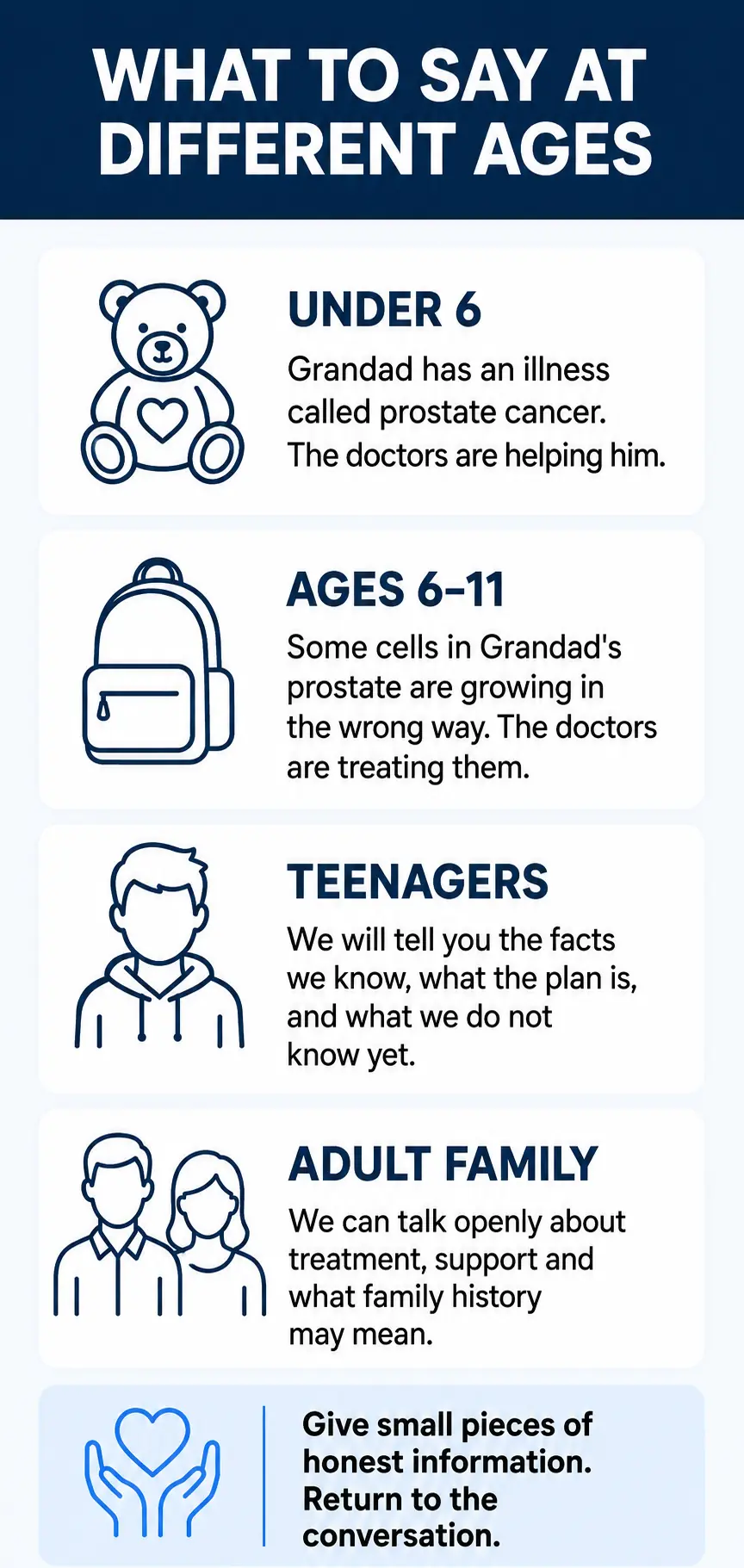
Young children: usually under 6
Use short, concrete sentences. Concentrate on what is happening now and what they will notice. They may ask the same question repeatedly; repetition is one way young children make sense of news.
Primary-school children: roughly 6–11
Children at this age can usually understand a simple body explanation. The prostate is a small gland below a man’s bladder. A gland is a body part that makes a substance the body uses.
Then ask: “Can you tell me what you think is happening?” This is better than asking only, “Do you understand?”

Babies, toddlers and children with additional communication needs
Babies and toddlers will not understand the diagnosis, but they will notice changes in routine, separation and the emotional tone of adults. Predictable meals, bedtimes and familiar carers can provide safety.
A child who is neurodivergent — meaning their brain processes information differently, as may happen with autism or ADHD — may need the conversation adapted. Use the communication style that already works for them:
- give one small piece of information at a time;
- use the same clear words when you repeat it;
- allow extra processing time and do not demand an immediate response;
- use pictures, a written plan or a visual calendar if helpful;
- prepare them for visible changes before those changes happen.
Talking with teenagers
Teenagers usually understand that cancer is serious. They may want detailed facts, say very little, become irritable or return quickly to their phone, friends or schoolwork. None of these reactions tells you how much they care.
Give the facts you know, say openly what you do not know and help them judge whether information found online applies to this particular diagnosis. Respect their growing independence while making it clear that support remains available.
Do not make a teenager the emotional adult
Parentification is the technical term for a child or teenager taking on emotional or practical responsibilities that belong to adults. Helping with a meal or sending Grandad a message can be positive. Feeling responsible for keeping the family together, protecting a parent from sadness or managing medical decisions is too much.


Adult children and grandchildren: include family history without creating panic
With adults, the conversation can include more detail about the diagnosis, treatment, practical support, privacy and who will communicate updates. Ask rather than assume what role they can take on.
An adult son or grandson may also wonder what the diagnosis means for his own health. A family history of prostate cancer can increase risk, but increased risk is not a prediction or a certainty. The most useful response is to record the family history and discuss it with a doctor.
Prostate Cancer UK advises men with a family history to speak to their GP about their risk from age 45. In Gibraltar, ask your doctor or clinical team what testing pathway is appropriate for you.
When a child asks, “Are you going to die?”
This is often the question adults fear most. Try not to answer so quickly that you give false reassurance. First find out what the child is really asking.
The answer must match what the medical team has actually said. A diagnosis of prostate cancer does not automatically mean that the person is dying. Do not introduce a terminal explanation unless the clinical team has told the family that this is the situation.
When treatment is intended to cure or control the cancer
“Cancer is a serious illness, but the doctors have treatments and are working to control it. Right now, we expect Grandad to be here with us. We will tell you if anything important changes.”
When you are waiting for more information
“We do not know everything yet. The doctors are finding out more. I promise we will tell you when we understand the situation better.”
If the medical team has explained that the cancer may shorten life: use clear words, give only the information known and explain what will happen to the child. For example: “The treatment is no longer stopping the cancer. The doctors think Grandad may die from it, although we do not know exactly when. You will be looked after, and we will keep talking about every change.”
Avoid phrases such as “going to sleep” or “we are going to lose him”. Young children may understand these literally and become frightened of sleep or ordinary separation.
If uncertainty is taking over the adults’ lives while you wait for tests or results, the exercises in Living With Uncertainty After Prostate Cancer can help the family separate the facts known today from the frightening possibilities the mind creates.
It is all right for children to see emotion
Some adults try to hide every tear because they fear upsetting the child. Children do not need emotionless adults. They need adults who can name feelings without asking the child to fix them.
This teaches something valuable: fear and sadness can be spoken about, people can remain connected while feeling them, and emotions eventually change. If your partner is carrying much of the care and communication, Supporting a Partner With Prostate Cancer offers additional guidance on sharing the emotional load.
Practical tools that make talking easier
Ask–Tell–Ask
- Ask: “What have you noticed?”
- Tell: give two or three simple facts.
- Ask again: “What do you think that means?” or “What is worrying you most?”
This turns a lecture into a conversation and helps you correct a misunderstanding early.
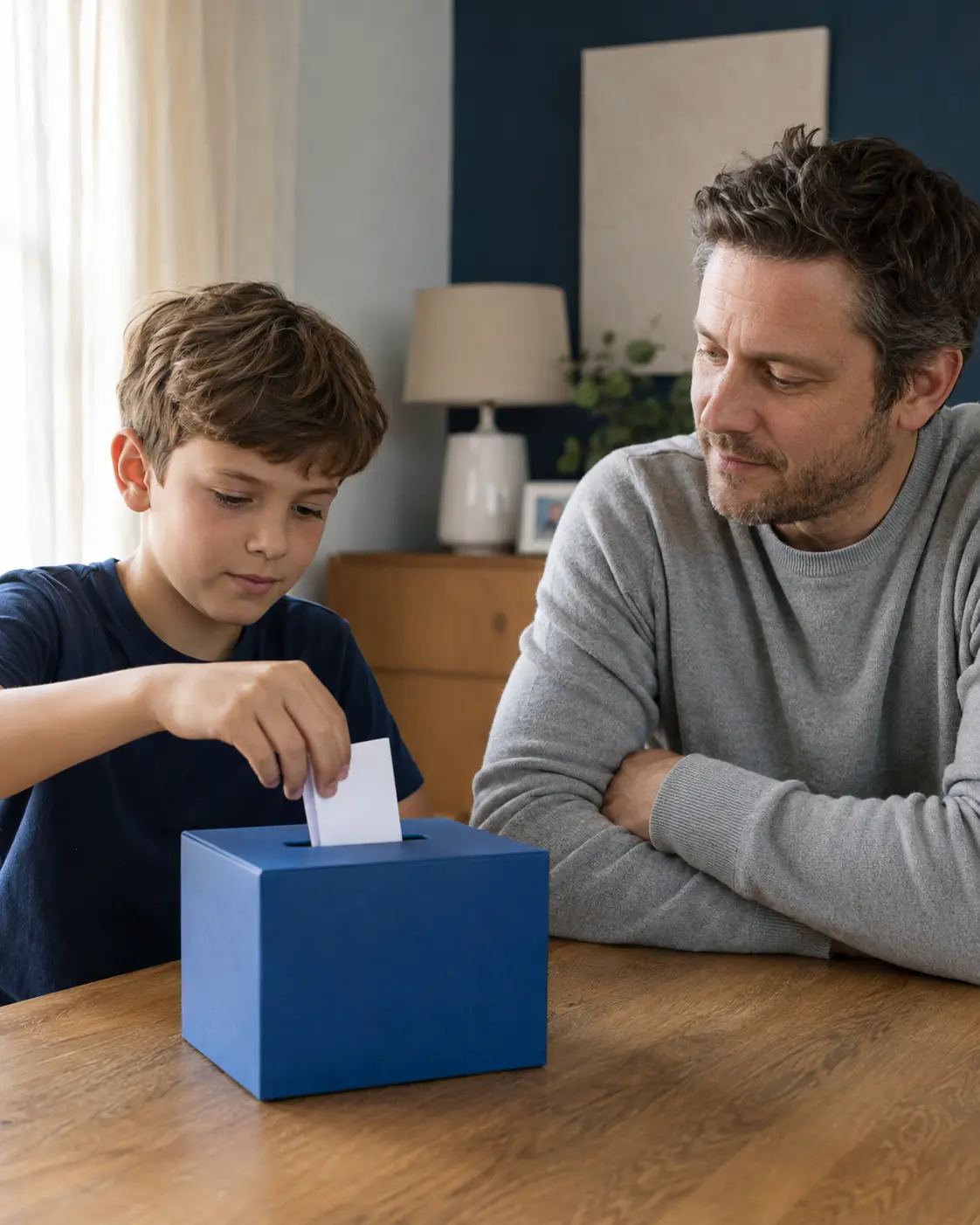
A question box
Put a small box and paper somewhere private. Children can write, draw or ask an adult to add a question. Check it at an agreed time. It is not a test: an empty box is also acceptable.
If a child asks something you cannot answer, say: “I do not know yet. I will find out what I can and come back to you.” Then remember to return.
A family calendar
Mark appointments, hospital days, who will collect the child and any days when Grandad may need more rest. Add ordinary and enjoyable plans too. The calendar should show that cancer is part of family life, not the whole of it.
A ten-minute check-in
Once or twice a week, ask three questions:
- What have you noticed since we last spoke?
- Is there anything you are wondering about?
- What would help this week?
Do not insist on a deep conversation. A simple “nothing today” is still participation.
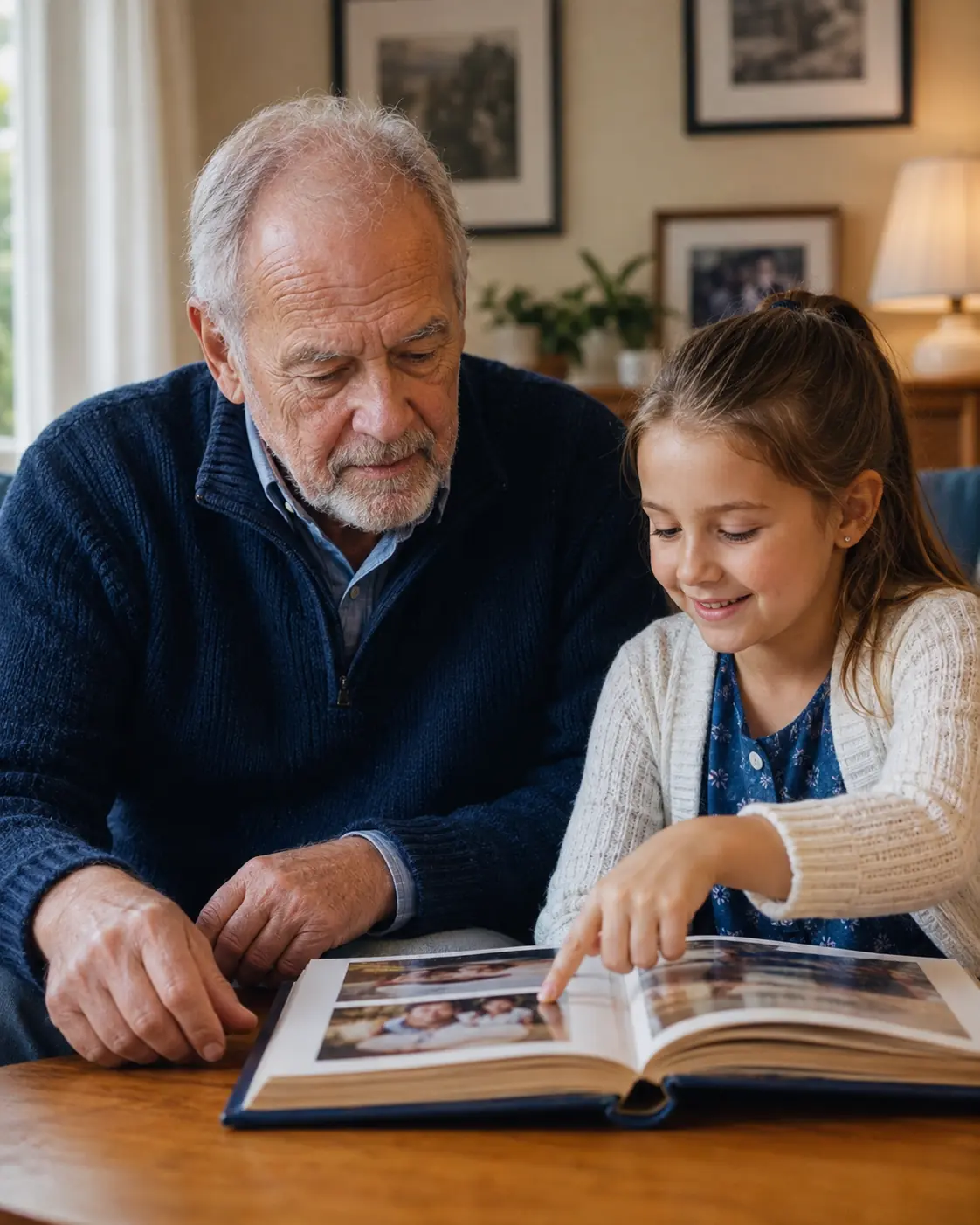
A low-energy connection menu
Treatment, appointments or worry may reduce the energy available for usual activities. Rather than repeatedly saying “not today”, create a short menu of things you can still do together:
- look through photographs or tell a family story;
- listen to music or watch a favourite programme;
- play a short card game;
- water plants or sit outdoors;
- send a voice note or read a bedtime story by video;
- take a short walk if medically comfortable.
The message is not “nothing has changed”. It is “our relationship still has a place, even when some activities must change”.
What to avoid — and what to say instead
| Avoid | Why it can be difficult | Try instead |
|---|---|---|
| “Everything will definitely be fine.” | It promises an outcome you may not be able to guarantee. | “The doctors have a plan, and we will tell you what we know.” |
| “Do not worry.” | Worry cannot simply be switched off and the child may stop sharing it. | “It makes sense to feel worried. What part worries you most?” |
| “Be brave for Dad or Grandad.” | It can make normal sadness, fear or playfulness feel disloyal. | “You are allowed to feel however you feel.” |
| “This is our secret.” | It leaves the child carrying adult information alone. | “This is private family information. Let us agree which trusted adults you may speak to.” |
| “Grandad is just tired.” | If the child knows more, a vague explanation can weaken trust. | “The cancer or treatment can make Grandad very tired.” |
| Many medical details at once. | Too much information can overwhelm rather than reassure. | Give two or three facts, pause and return later. |
Should the school or other adults know?
It is often helpful for a nursery, school or trusted club leader to know. A child may show worry through tiredness, concentration problems, anger, quietness or physical complaints rather than through words. An informed adult can respond with understanding and let the family know about changes.
- Tell them what the child has been told, so the language stays consistent.
- Explain what practical changes may affect the child.
- Agree who the child can approach during the day.
- Ask them to share significant changes without treating every difficult day as a crisis.
With a teenager, speak to them before contacting school or college whenever possible. They may value school as the one place that still feels normal. Including them in the decision protects trust and privacy.
When a child, teenager or family may need more support
There is no single “correct” reaction. A child may cry, ask practical questions, play immediately afterwards or seem not to react. Give them time. Look for a pattern that is persistent, becoming stronger or interfering with daily life.
Signs worth discussing with a professional
- ongoing sleep or eating changes;
- frequent headaches or stomach aches without a clear cause;
- persistent separation anxiety or loss of skills already gained;
- a marked fall in school attendance, concentration or performance;
- withdrawal, anger, guilt or preoccupation with death that continues or worsens;
- giving up friends and activities or taking on adult responsibilities;
- any talk of self-harm, suicide or not wanting to be alive.
Where to begin
Speak to your GP, the child’s school support team, the prostate cancer clinical nurse specialist or a registered psychologist. You do not have to wait until the difficulty becomes severe.
Families in Gibraltar who would prefer psychological support in English and cannot easily travel may also explore online therapy through Ocnos Psychology Clinic, when that format is suitable for the person and situation.
If somebody may be in immediate danger or cannot stay safe, use emergency services rather than waiting for a routine psychological appointment.
A final thought from Héctor
You may finish the first conversation and remember a sentence you wish you had said differently. That does not mean you have failed. Relationships are repaired and strengthened through returning: “I have been thinking about what we said yesterday. Is there anything you want to ask now?”
You cannot promise that nothing difficult will happen. You can promise something more honest: that children will be told what they need to know, cared for through change and allowed to feel without having to protect the adults.
Talking about prostate cancer does not take hope away. When it is done with honesty and care, it gives hope somewhere safe to stand.
Frequently asked questions
Should children always be told about a prostate cancer diagnosis?
In most families, an honest age-appropriate explanation is safer than silence because children notice changes and may imagine something worse. The amount of detail should match the child’s age, understanding and what they will see. If there are unusual family or safeguarding circumstances, ask the clinical team or a psychologist for individual guidance.
Is it all right to use the word “cancer” with a young child?
Yes. A simple, calm explanation of the word is usually less frightening than hearing it unexpectedly. Say where the cancer is, that it is not contagious, that the child did not cause it and what the doctors are doing now.
What if my child asks whether Grandad will die?
Ask what prompted the question, then answer according to the medical facts you have. Do not promise that everything will be fine, but do not suggest that death is expected if the medical team has not said this. “We do not know yet” can be an honest answer when followed by a promise to update them.
What if the child shows no reaction?
This can be normal. Children often take in information in small pieces and may return later, or express feelings through behaviour and play. Keep the door open without repeatedly pressing them to talk.
Should we tell the school?
It is often useful because school staff can understand changes and offer quiet support. Tell the child what will be shared. With teenagers, involve them in deciding who needs to know whenever possible.
How much should a teenager help?
Small, agreed tasks can help a teenager feel included. Their education, friendships, rest and ordinary life still matter. They should not manage medical decisions, become the main carer or feel responsible for an adult’s emotional stability.
What should an adult son or grandson do about family risk?
Keep a clear record of who was diagnosed and at what age, then discuss personal risk and the timing of PSA testing with a doctor. Family history can increase risk, but it does not mean that prostate cancer is inevitable.
Sources and further reading
This article brings psychological guidance together with current information from established UK cancer and child-bereavement organisations.
- Macmillan Cancer Support: Talking to children and teenagers about cancer
- Cancer Research UK: Talking to children about cancer
- Prostate Cancer UK: Support for family and friends
- Child Bereavement UK: Children’s understanding of death at different ages
- Prostate Cancer UK: Prostate cancer risk factors
- Prostate Cancer Gibraltar: Support resources