
Hormone Therapy and Prostate Cancer: Coping With Mood Changes, Fatigue and Loss of Confidence
If treatment has left you thinking “I do not feel like myself”, this guide is for you. Psychologist Héctor Lozano explains what may be happening and offers realistic ways to protect your energy, relationships and sense of self.

Hormone therapy may change how you feel, but those changes are not a personal failure. You do not have to hide them, explain them perfectly or manage them alone.
There is a sentence I often return to when speaking about the psychological impact of illness: “I know the treatment is helping me, but I do not feel like myself.”
For some men, hormone therapy brings changes that are difficult to explain. You may be sleeping but never feel properly rested. Small frustrations may affect you more than they used to. You may lose interest in sex, social plans or tasks that once gave structure to your day. You may look at your body and feel that it no longer represents you.
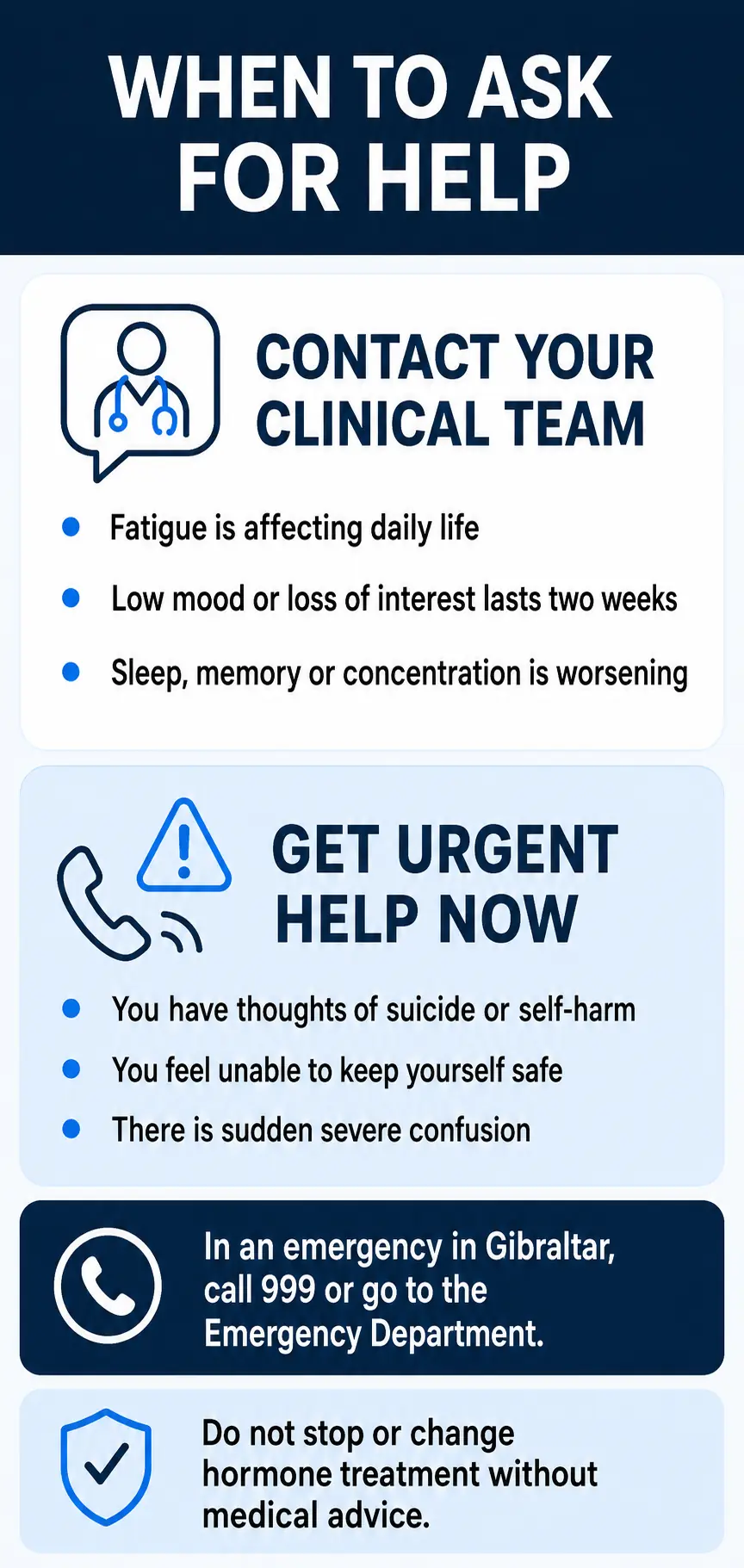
Families can notice these changes too, but they may interpret them differently. Tiredness can look like withdrawal. Low sexual desire can feel like rejection. Poor concentration can appear as though someone is not listening. Irritability can hide fear, shame or a loss of control.
None of this means that every difficulty is caused by treatment, and it does not mean that every man will experience the same effects. My aim is not to tell you how you should feel. It is to help you understand possible patterns, identify what needs medical attention and recover some influence over everyday life.
You are not “failing to cope” because treatment has affected your energy, emotions or confidence. Coping begins with seeing the change clearly and responding to it with support rather than blame.
What hormone therapy may change
Hormone therapy is used to reduce testosterone or stop it from reaching prostate cancer cells. You may also hear the term androgen deprivation therapy, or ADT. “Androgens” are hormones such as testosterone, so ADT simply means treatment that deprives the cancer of those hormones.
Testosterone is connected not only with sexual function, but also with energy, muscle strength, body composition and aspects of mood. This helps explain why some men notice changes in several areas of life at once. The type of treatment, how long you receive it, your general health and your personal circumstances can all affect the experience.
Energy
Persistent tiredness, reduced strength or needing longer to recover after ordinary activity.
Mood
Feeling lower, more anxious, tearful, emotionally sensitive or easily irritated.
Thinking
Some men report forgetfulness, slower thinking or difficulty concentrating.
Identity
Changes in confidence, body image, independence, sexual desire or the roles that matter to you.

Do not assume that every change is caused by hormone therapy. Fatigue, poor sleep, pain, anaemia, another medicine, depression or a separate health problem can produce similar symptoms. Tell your doctor, specialist nurse or GHA clinical team about anything new, worsening or difficult to manage. Do not stop or change treatment without medical advice.
Fatigue is not the same as ordinary tiredness
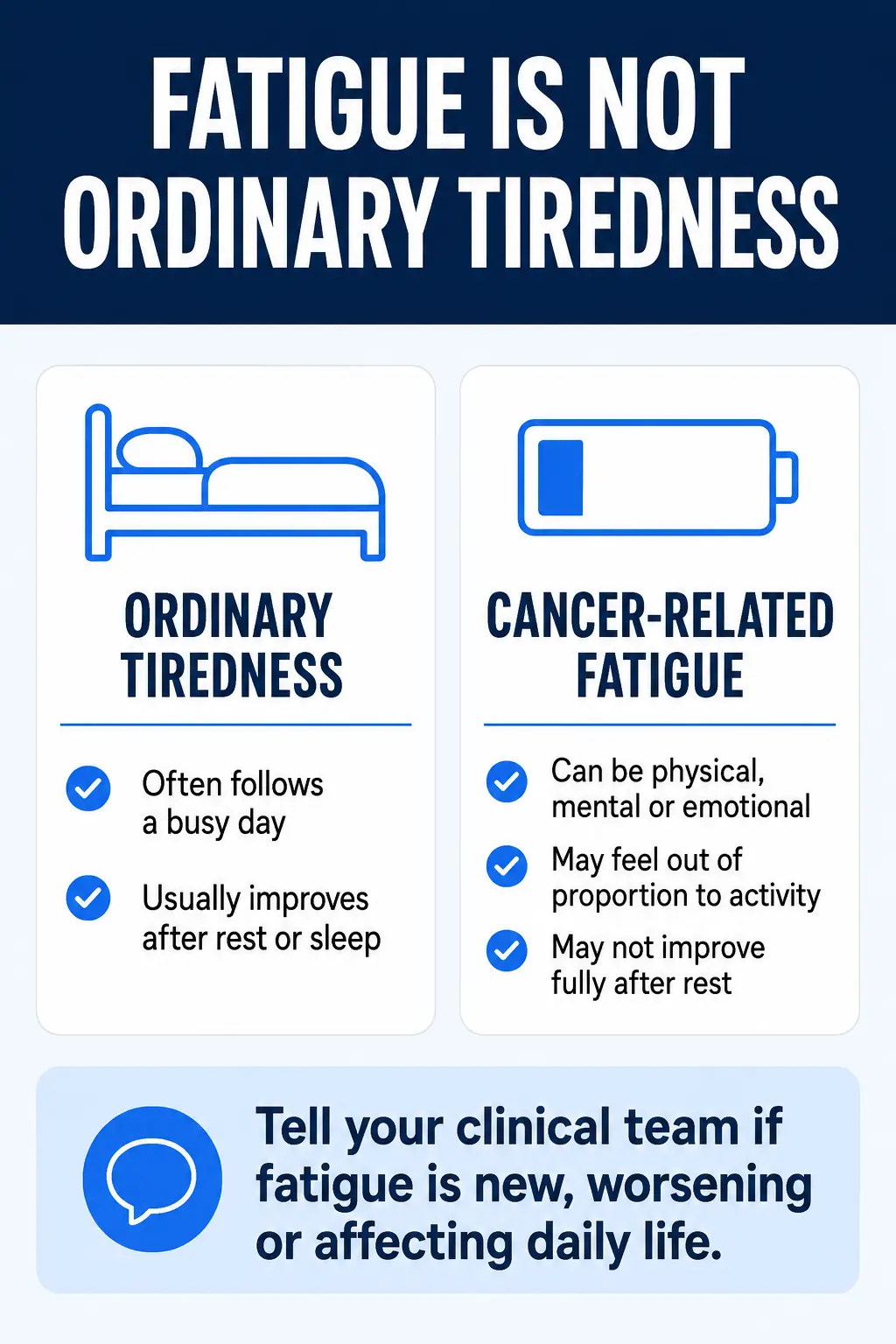
Cancer-related fatigue is a deeper form of physical, mental or emotional exhaustion connected with cancer or its treatment. Unlike normal tiredness, it may feel out of proportion to what you have done and may not disappear after rest or sleep.
This difference matters. If you tell yourself, “I am just being lazy”, you are likely to respond with criticism or push yourself until you crash. If you recognise fatigue as a real symptom, you can plan your energy more carefully and discuss it properly with your clinical team.
Many men fall into a boom-and-bust cycle: doing everything possible on a better day, becoming exhausted afterwards, then feeling guilty during recovery. Pacing means spreading effort more evenly. It is not giving up; it is choosing a level that your body can repeat.
Exercise: a seven-day pattern diary
For one week, make a single brief entry at roughly the same time each day. This is not about monitoring yourself constantly. It is about finding patterns you can use.
- Energy: give it a score from 0 to 10.
- Mood: give it a score from 0 to 10.
- Context: note sleep, hot flushes, pain, treatment or anything unusual.
- Activity: write down what you did before your energy changed.
- Meaning: record one small thing that mattered that day.
At the end of the week, ask: When is my energy usually highest? What drains it most? What helps without causing a crash later? Take the notes to an appointment if fatigue is affecting daily life.

Try “Must, Matters and Can Wait”
When energy is limited, a long list can make the day feel like a failure before it has begun. Try choosing only three categories:
Rest can also be planned. A short rest before you are completely exhausted is often more useful than waiting until you can do nothing else.
“Why am I so irritable?” Mood changes without shame
Hormone therapy may affect mood directly, but emotions are rarely caused by one factor alone. Interrupted sleep, hot flushes, reduced strength, sexual changes, uncertainty and losing familiar roles can all shorten your emotional fuse.
Irritability is sometimes the part that families see first. Underneath it may be exhaustion, fear, embarrassment or a sense of powerlessness. Understanding that background can reduce blame, but it is important to be clear: a treatment effect can help explain harmful behaviour; it does not excuse it.
A four-part pause
- Pause. Stop before the conversation becomes more heated.
- Name. Say what is happening: “I am overwhelmed and becoming irritable.”
- Ask. Request something specific: “I need ten minutes to settle myself.”
- Return. Come back when you said you would. A pause should protect the conversation, not end it.
A difficult week is not always depression
It is understandable to have low days. Depression means a more persistent pattern of low mood or loss of interest that interferes with everyday life. Speak to your clinical team or a psychologist if low mood continues for around two weeks, if you are withdrawing from everyone, or if hopelessness is increasing. You do not need to wait until things become unbearable.
When motivation disappears
Low energy and low motivation are not identical, but they can reinforce each other. When activities stop, the day provides fewer moments of connection, achievement or pleasure. Confidence drops, mood falls and starting becomes even harder.
Psychologists sometimes use behavioural activation. This technical term means using small, planned actions to help mood and routine recover. It does not mean pretending to feel positive or forcing yourself through severe fatigue.
Action before motivation
Rather than waiting to feel ready, choose an activity small enough to begin for five minutes. At the end of those five minutes, decide whether to continue, adapt it or stop. Stopping after the agreed time is not failure: you completed the experiment.
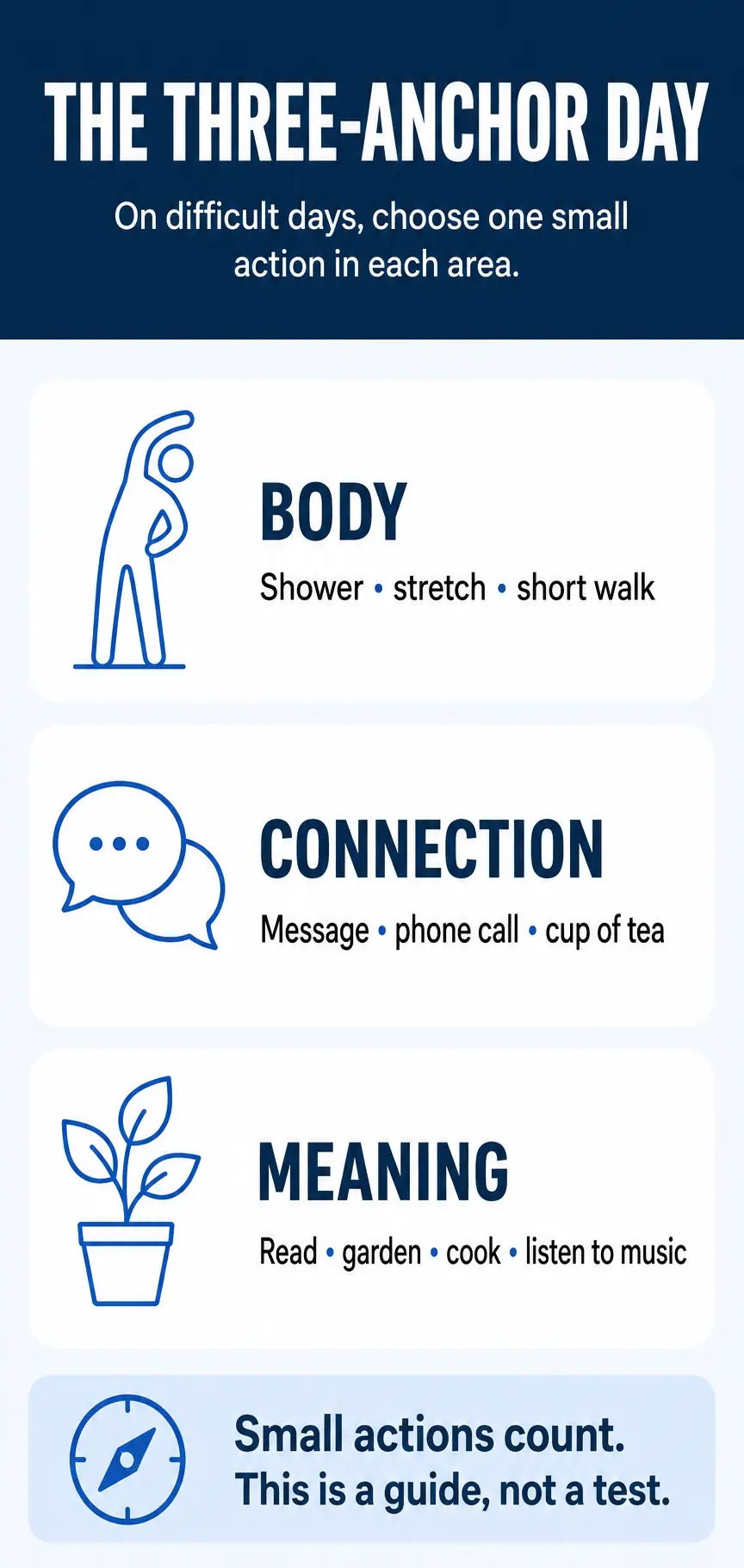
On difficult days, aim for one small action for your body, one for connection and one for meaning. These are anchors, not targets against which to judge yourself.

Movement can be gentle and adapted
Evidence suggests that appropriately tailored exercise can help some men maintain strength, physical function and quality of life during hormone therapy. The important words are appropriately tailored.
A gentle walk, stretching or supervised resistance exercise may be more suitable than trying to return immediately to a previous routine. If you have bone problems, pain, heart conditions, dizziness or other health concerns, speak to your doctor or a suitably qualified exercise professional before making changes.
Do not turn exercise into a moral test. Movement is one possible support. If fatigue is severe, pushing harder without medical guidance may make you feel worse.
Memory, concentration and “brain fog”
Some men describe brain fog, an everyday expression for feeling mentally slower, forgetful or unable to concentrate as clearly as before. Research into measurable cognitive change during hormone therapy is mixed, but the difficulties people notice in daily life still deserve attention.
Trying harder is rarely the most effective response. Reduce the amount your memory has to hold:
- Keep one notebook or one notes app for appointments and questions.
- Use alarms and calendar reminders for medication and commitments.
- Complete one mentally demanding task at a time.
- Ask for important medical information in writing.
- Take someone you trust to appointments if you would find that helpful.
- Repeat the plan back in your own words: “So the next step is…”
Tell your clinical team if memory or concentration problems are new, worsening or affecting safety. Sudden or severe confusion is not ordinary brain fog and needs urgent medical attention.
Confidence, body image and the feeling of losing yourself
Confidence is often built around things we barely notice until they change: being physically capable, working, making decisions, caring for other people, having sex or being recognised as the dependable one.
Hormone therapy can affect strength, body shape, sexual desire and independence. It is understandable if these changes touch ideas about masculinity or ageing. But a change in function is not the same as a loss of worth.
Exercise: Changed, Still Here, Protect
The aim is not to deny what treatment has changed. It is to stop those changes from becoming the only description of who you are.

Low sexual desire is not necessarily rejection. Hormone therapy can reduce libido, which means sexual desire. Naming this directly can protect a relationship from painful assumptions. For a fuller discussion of communication, intimacy and the impact on both people, read Supporting a Partner With Prostate Cancer: A Psychologist’s Perspective.

For partners and families: what you see may not be what he feels
Families often try to help by encouraging, reminding or taking over. These responses usually come from love, but they can unintentionally create pressure or make a man feel less independent.
- Treat fatigue as a real symptom, not a lack of effort.
- Do not automatically interpret low sexual desire as rejection.
- Ask before taking over tasks he may still want to do himself.
- Replace “You need to stay positive” with “What would help today?”
- Encourage medical review without arguing about whether symptoms are real.
- Remember that family members are also allowed to need support.
When to ask for more help
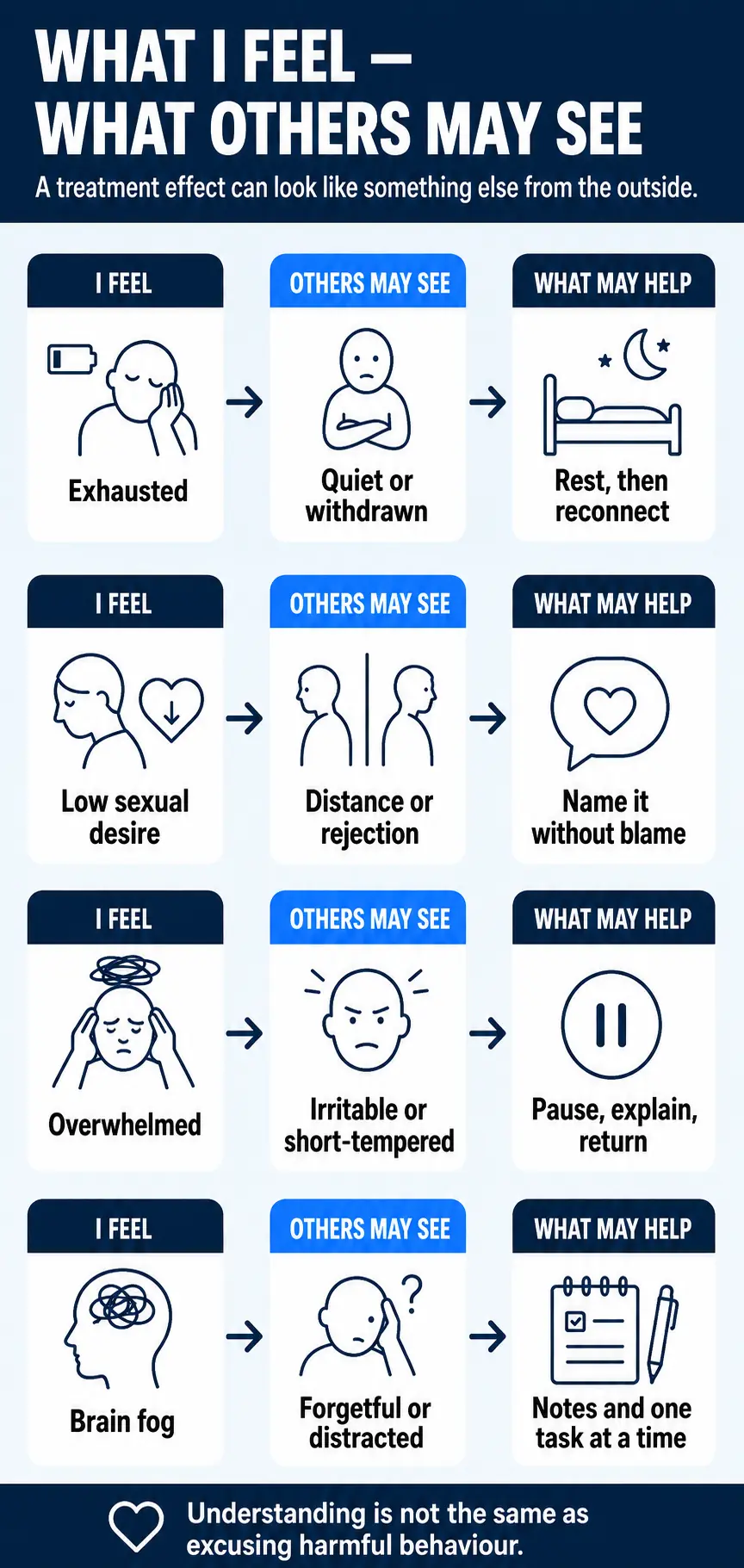
You do not need to reach a crisis before speaking to someone. Contact your doctor, specialist nurse or GHA clinical team if fatigue is interfering with daily life, mood changes are persistent, sleep is deteriorating or problems with thinking are becoming more noticeable.
Psychological support may be useful when low mood, anxiety, irritability, loss of confidence or relationship strain is making it difficult to function. A psychologist cannot remove the medical side effects of treatment, but can help you understand emotional patterns, communicate more clearly and build routines around your current capacity.
For people in Gibraltar who prefer support from home or find travel difficult, online psychological support in English may be one practical option. You can also contact Prostate Cancer Gibraltar for information and support.
Speak to your clinical team
Persistent fatigue, low mood, loss of interest, worsening sleep, memory changes or side effects affecting daily life.
Get urgent help now
Thoughts of suicide or self-harm, feeling unable to stay safe, or sudden severe confusion.
In an emergency in Gibraltar, call 999 or go to the Emergency Department.
A final thought from Héctor
You may not be able to choose every effect of treatment. You can still influence how those effects are understood, discussed and supported.
Some days, coping will mean taking a short walk or talking openly with your partner. On another day, it may mean cancelling something, resting without attacking yourself or telling your doctor that a symptom has become too much. These are not small failures or small victories. They are ways of responding honestly to the body and life you have today.
The goal is not to become exactly who you were before treatment. It is to remain connected with what matters, to protect your relationships and to make room for support while treatment is asking so much of you.
Frequently asked questions
Is it normal to feel different during hormone therapy?
Some men notice changes in energy, mood, concentration, body image or sexual desire, while others experience fewer effects. Feeling different is worth discussing with your clinical team, especially if the change is new, worsening or interfering with daily life.
Does hormone therapy cause depression?
Hormone therapy is associated with an increased risk of depression and anxiety, but this does not mean that every man will develop either condition. Mood is also affected by sleep, physical symptoms, previous mental health, relationships and the experience of living with cancer. Persistent low mood deserves proper assessment.
Is fatigue just something I have to accept?
Fatigue is common, but it should still be reported. Your team may need to consider sleep, pain, anaemia, medicines, mood or other health factors. Pacing, adapted activity and psychological strategies can help some people, but support should be tailored to you.
What can I do about brain fog?
Use external supports such as one notebook, calendar reminders, written medical information and one task at a time. Tell your team if problems are worsening or affecting safety. Sudden severe confusion needs urgent medical attention.
How can my family help without taking over?
Ask what kind of help is wanted, offer one specific practical action and protect the person’s independence where possible. Listening and believing the experience are often more useful than pushing positivity or trying to solve everything.
Should I stop treatment if the emotional side effects are difficult?
No treatment should be stopped or changed without speaking to the medical team responsible for your care. Tell them clearly what you are experiencing and how it is affecting everyday life so that they can discuss safe options and additional support.
Evidence and further reading
- Prostate Cancer UK: how hormone therapy may affect you
- Prostate Cancer UK: hormone therapy and your feelings
- Cancer Research UK: living with the effects of hormone therapy
- Cambridge University Hospitals: androgen deprivation therapy for prostate cancer
- ASCO–Society for Integrative Oncology guideline on cancer-related fatigue
- Systematic review and meta-analysis of hormone therapy and mental wellbeing